Water Shortage in Mumbai: What is Causing the Crisis?
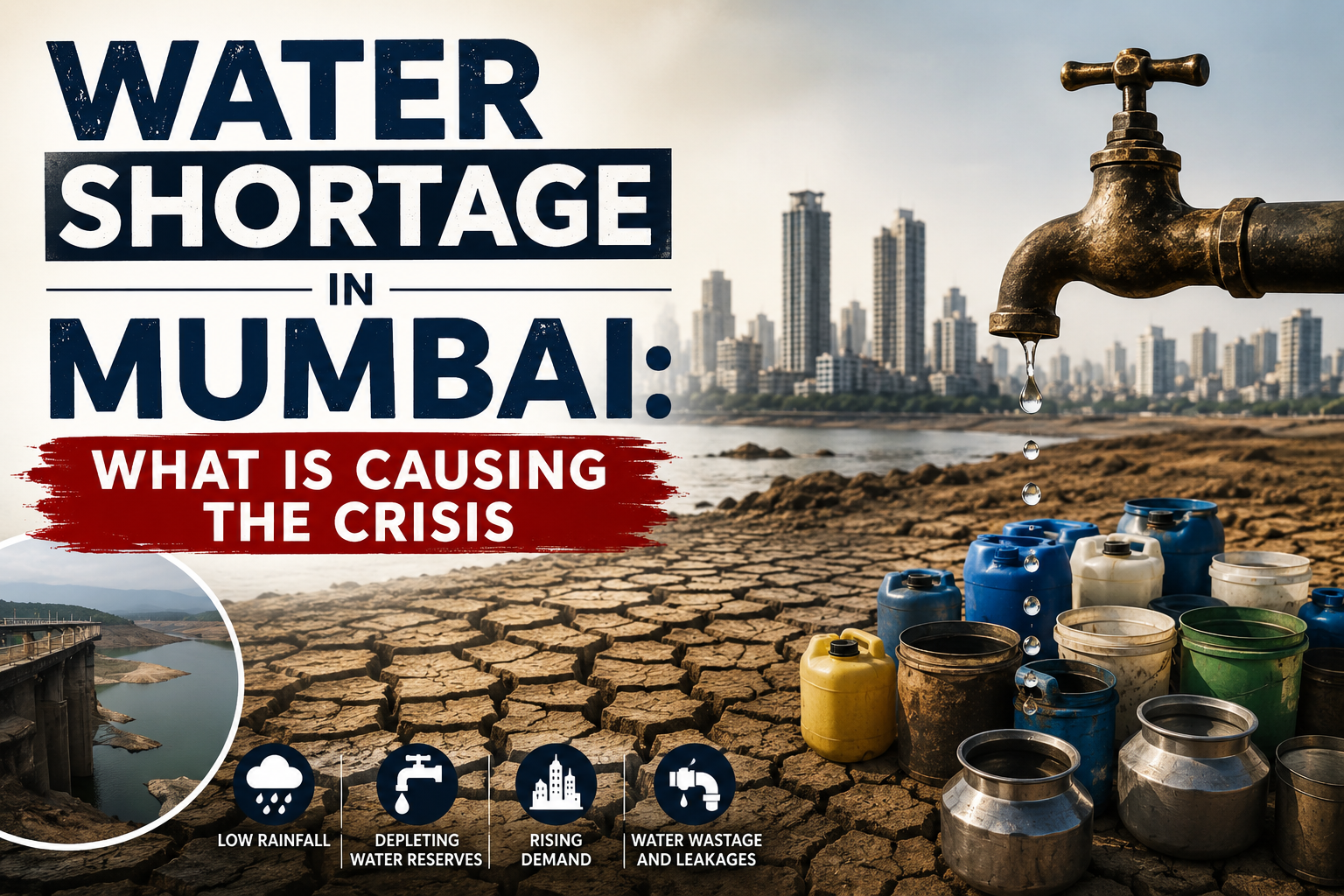
The lakes supplying water to Mumbai (Bhatsa, Upper Vaitarna, Middle Vaitarna, Modak Sagar, Tansa, Vihar, and Tulsi) are now left with only about 9% to 10% of their water capacity. Mumbai, the country's financial capital, is currently facing a severe water crisis. Known for heavy rainfall every year, the city is grappling with a water shortage this time due to a delayed monsoon and scanty rainfall. Millions of residents are facing the challenge of conserving water for their daily needs. Water levels in the seven major reservoirs that quench Mumbai's thirst have dropped drastically. Reports indicate that only about 10 percent of the total capacity remains in these reservoirs, forcing the administration to take strict measures.

Mumbai Water Shortage
What caused the water shortage in Mumbai?
The primary reason for the water shortage in Mumbai is the weak monsoon this year. Usually, there is good rainfall in the early days of June, but this time, rainfall has been significantly low. Maharashtra recorded rainfall well below normal levels during the first fortnight of June, which has directly impacted reservoir water levels.
Additionally, a growing population, rising water demand, and a lack of water conservation efforts are exacerbating the problem.
Strict measures taken by the administration
People have attributed this situation to shortcomings on the part of the administration and the government, citing the high water requirement for 100% ethanol production and the felling of trees and forests in the Aravalli hills.
In view of the water shortage, the municipal administration has taken several key decisions. Water supply to new construction sites has been halted. Furthermore, water supply to swimming pools, as well as industrial and commercial establishments, has been curtailed. Water supply has already been reduced in several areas to ensure the available water lasts longer.
The administration has also appealed to the public to use water judiciously and avoid any form of wastage.
How are ordinary people being affected?
Residents across many areas of Mumbai are grappling with water scarcity. Even the affluent are affected; videos of actors expressing their distress over the shortage have gone viral on social media. Some housing societies have been forced to rely on water tankers, leading to increased expenses for residents. Many families have started altering their daily routines to conserve water.
Water usage for laundry, cleaning, and other household chores is being restricted. People are hopeful that good rainfall will arrive soon and the situation will return to normal.
Will the rain bring relief?
Meteorologists believe that if there is significant rainfall in the coming days, water levels in Mumbai's reservoirs could rise, bringing relief to the city. However, experts also emphasize that relying solely on rainfall is not enough. The city needs to focus on long-term strategies such as water conservation, rainwater harvesting, and better water management.
Conclusion
The water crisis in Mumbai is not merely a seasonal issue; it serves as a warning for the future. If timely attention is not paid to water conservation and proper management, the crisis could worsen in the years to come.
What caused the water shortage in Mumbai?
The primary reason for the water shortage in Mumbai is the weak monsoon this year. Usually, there is good rainfall in the early days of June, but this time, rainfall has been significantly low. Maharashtra recorded rainfall well below normal levels during the first fortnight of June, which has directly impacted reservoir water levels.
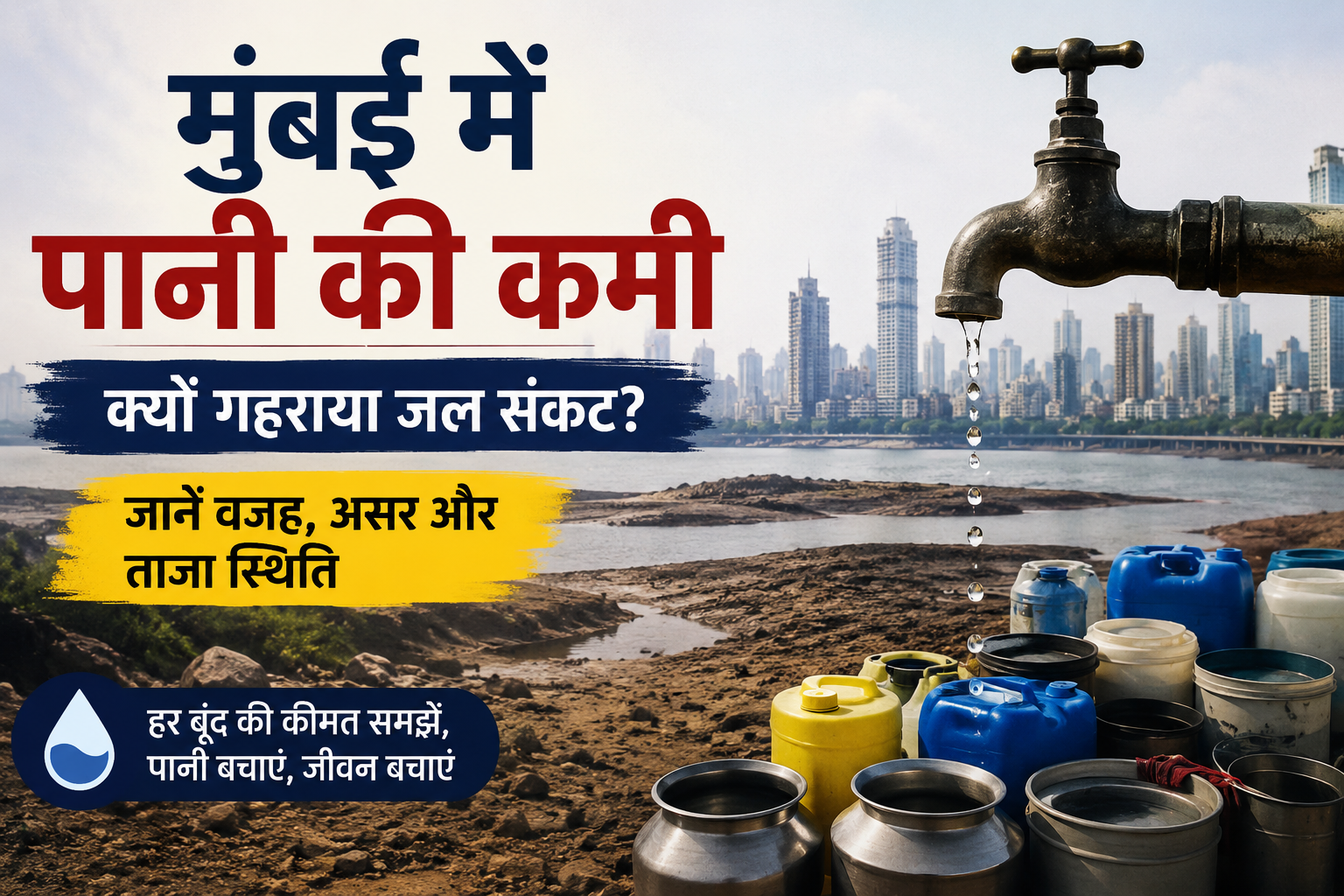
Additionally, a growing population, rising water demand, and a lack of water conservation efforts are exacerbating the problem.
Strict measures taken by the administration
People have attributed this situation to shortcomings on the part of the administration and the government, citing the high water requirement for 100% ethanol production and the felling of trees and forests in the Aravalli hills.
In view of the water shortage, the municipal administration has taken several key decisions. Water supply to new construction sites has been halted. Furthermore, water supply to swimming pools, as well as industrial and commercial establishments, has been curtailed. Water supply has already been reduced in several areas to ensure the available water lasts longer.
The administration has also appealed to the public to use water judiciously and avoid any form of wastage.
How are ordinary people being affected?
Residents across many areas of Mumbai are grappling with water scarcity. Even the affluent are affected; videos of actors expressing their distress over the shortage have gone viral on social media. Some housing societies have been forced to rely on water tankers, leading to increased expenses for residents. Many families have started altering their daily routines to conserve water.
Water usage for laundry, cleaning, and other household chores is being restricted. People are hopeful that good rainfall will arrive soon and the situation will return to normal.
Will the rain bring relief?
Meteorologists believe that if there is significant rainfall in the coming days, water levels in Mumbai's reservoirs could rise, bringing relief to the city. However, experts also emphasize that relying solely on rainfall is not enough. The city needs to focus on long-term strategies such as water conservation, rainwater harvesting, and better water management.
Conclusion
The water crisis in Mumbai is not merely a seasonal issue; it serves as a warning for the future. If timely attention is not paid to water conservation and proper management, the crisis could worsen in the years to come.
Water is the foundation of life, and conserving it is the responsibility of us all. Along with the administration, ordinary citizens must also recognize the value of every drop of water; only then can this crisis be resolved permanently.
Water is the foundation of life, and conserving it is the responsibility of us all. Along with the administration, ordinary citizens must also recognize the value of every drop of water; only then can this crisis be resolved permanently.
Ajay Parihar
Lead Systems Architect & Editorial Editor at CJP Media.
Regular contributor to CJP Media. Specializes in deep-dive editorial analyses, systems architecture, and modern startup ecosystems.